How to Use BristleMagic:
How to Use Bristle Magic Brush Cleaner and Reconditioner.
- 1. Wipe excess paint away with a cloth our paper towel.
- 2. Soak for an adequate amount of time to soften paint.
- 3. Work the bristles with a comb or brush in the direction from ferrule to tip.
- 4. Check brush for more dried paint and repeat as needed
- 5. Rinse with soap and water.
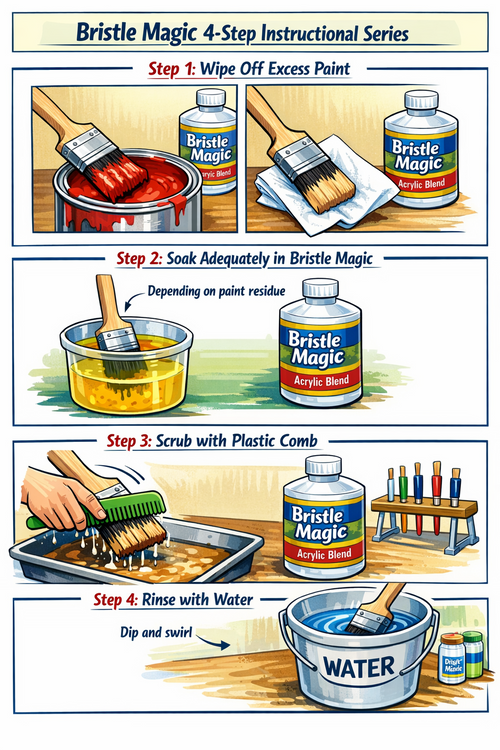
Bristle Magic 4-Step Brush Cleaning Guide | How to Clean Paint Brushes Properly
Illustrated Bristle Magic 4-Step Instructional Series showing how to clean paint brushes effectively: wipe off excess paint, soak in Bristle Magic Acrylic Blend, gently work out paint with a comb, and rinse with water for clean, restored bristles.
Why Choose Bristle Magic? Here are some reasons.
- Brush cleaner for dried paint
- Brush cleaner for daily use
Recondition paintbrushes
Removes oil and acrylic paint
Biodegradable solvent alternative
Non-toxic paintbrush cleaner
Made in USA brush cleaner
Patented brush cleaning solution
Eco-friendly paint cleaner
Safe brush cleaner for artists
Industrial paintbrush clean
Bristle Magic comes in 3 oz travel size
How to Use Bristle Magic
Watch how Bristle Magic restores dried paintbrushes, and reconditions ruined tools. Our patented, non-toxic formula is safe, biodegradable, and made in the USA.
Frequently Asked Questions
Everything artists want to know about cleaning, caring for, and getting more life out of their brushes.
Is brush cleaner just white spirit?
No — and the difference matters. White spirit (also called mineral spirits) is a petroleum-based solvent. It dissolves oil paint effectively, but it comes with strong fumes, is flammable, requires careful disposal, and can dry out and damage brush bristles over time.
A dedicated brush cleaner is formulated to do more than just strip paint. Good brush cleaners break down paint at the molecular level while also conditioning the bristles, so your brushes stay soft, shapeable, and ready for the next session. Some brush cleaners also allow you to rinse with water — something white spirit can't do on its own.
What did Bob Ross clean his brushes with?
Bob Ross used odorless paint thinner (odorless mineral spirits) in a dedicated brush cleaning bucket with a metal screen at the bottom. His famous routine was to dip the brush in the thinner, scrub it against the screen, then shake and "beat the devil out of it" against the easel leg or a beater rack.
While iconic and entertaining, this method splatters solvent-laden paint residue around the studio — something many artists and health-conscious painters now prefer to avoid. Odorless mineral spirits are still petroleum-based solvents, and prolonged or repeated exposure in enclosed spaces raises legitimate health concerns.
What is a china bristle?
"China bristle" refers to natural hog hair — specifically, the stiff hair from the neck and back of pigs — and it gets its name because China has historically been the world's dominant producer, supplying over 70% of global bristle. During World War II, bristle was even classified as a strategic military material by the United States.
China bristle brushes come in two main varieties. Black china bristle is stiffer and best suited for oil-based paints and stains. White china bristle is finer and softer, producing a smoother finish — ideal for varnishes, polyurethanes, and shellacs.
One important rule: never use natural china bristle brushes with water-based (latex or acrylic) paints. The natural hair absorbs water, causing the bristles to swell, go limp, and lose their shape. For acrylics and latex, use synthetic bristle brushes instead.
How do professional painters clean their brushes?
Professional techniques vary by paint type. For water-based paints (latex, acrylic), most pros wipe off excess paint, then wash in warm soapy water, working the bristles by hand or with a brush comb to get paint out from deep near the ferrule. They rinse until the water runs clear.
For oil-based paints, traditional practice is to clean with mineral spirits or turpentine first, then follow up with soap and water. Many professionals now finish with a brush-specific soap or conditioner to keep bristles soft and maintain the brush's shape over time.
The single most important rule across all methods: clean your brushes before the paint dries. Once paint hardens — especially acrylic — it's exponentially harder to remove and can permanently ruin a good brush.
Can I use Dawn dish soap to clean my paint brushes?
Yes — Dawn dish soap is one of the most popular household brush cleaners, especially among artists working with acrylics, latex, and even oil paints. Its grease-cutting formula effectively breaks down paint, and it's gentle enough to use with your bare hands. Many professional oil painters use Dawn as their go-to cleaning soap after wiping excess paint from their brushes.
However, dish soap has limitations. It doesn't condition or recondition bristles, so over time brushes can become dry and lose their shape. It also struggles with paint that has started to dry or harden in the brush, particularly oil-based paints. And for oil painters, you'll still typically need a solvent to do the heavy lifting before the soap-and-water step.
What can I use if I don't have mineral spirits?
Several alternatives can work in a pinch, depending on what you're cleaning:
For oil-based paints: Turpentine is the traditional alternative. Citrus-based solvents (like Citra-Solv) are a less toxic option. Some artists use safflower oil or linseed oil to dissolve wet oil paint from brushes, followed by a soap-and-water wash. Denatured alcohol works on shellac-based paints specifically.
For water-based paints: Warm water and dish soap are all you need for latex and acrylic — mineral spirits aren't necessary in the first place.
For dried paint: This is where most household substitutes fall short. Vinegar, rubbing alcohol, and acetone can help in varying degrees, but they can also damage bristles or leave residue.